

 當(dāng)前位置:
中空玻璃生產(chǎn)線的磨損如何解決
時(shí)間:2024-12-07 來源:http://m.bjrcc.com.cn/ 發(fā)布人:昌盛機(jī)械
玻璃生產(chǎn)線的磨損如何解決,目前關(guān)于中空玻璃生產(chǎn)線磨損尚無統(tǒng)一的分類方法,大體可概括為兩類:一類是根據(jù)磨損結(jié)果對(duì)磨損表觀的描述,如點(diǎn)蝕磨損、膠合磨損、擦傷磨損等;另一類是根據(jù)摩擦機(jī)理,分磨粒磨損、粘著磨損、疲勞磨損、腐蝕磨損等。
How to solve the wear and tear of glass production lines? Currently, there is no unified classification method for the wear of insulated glass production lines, which can be roughly summarized into two categories: one is the description of the wear surface based on the wear results, such as pitting wear, bonding wear, abrasion wear, etc; Another type is based on the friction mechanism, which includes abrasive wear, adhesive wear, fatigue wear, corrosion wear, etc.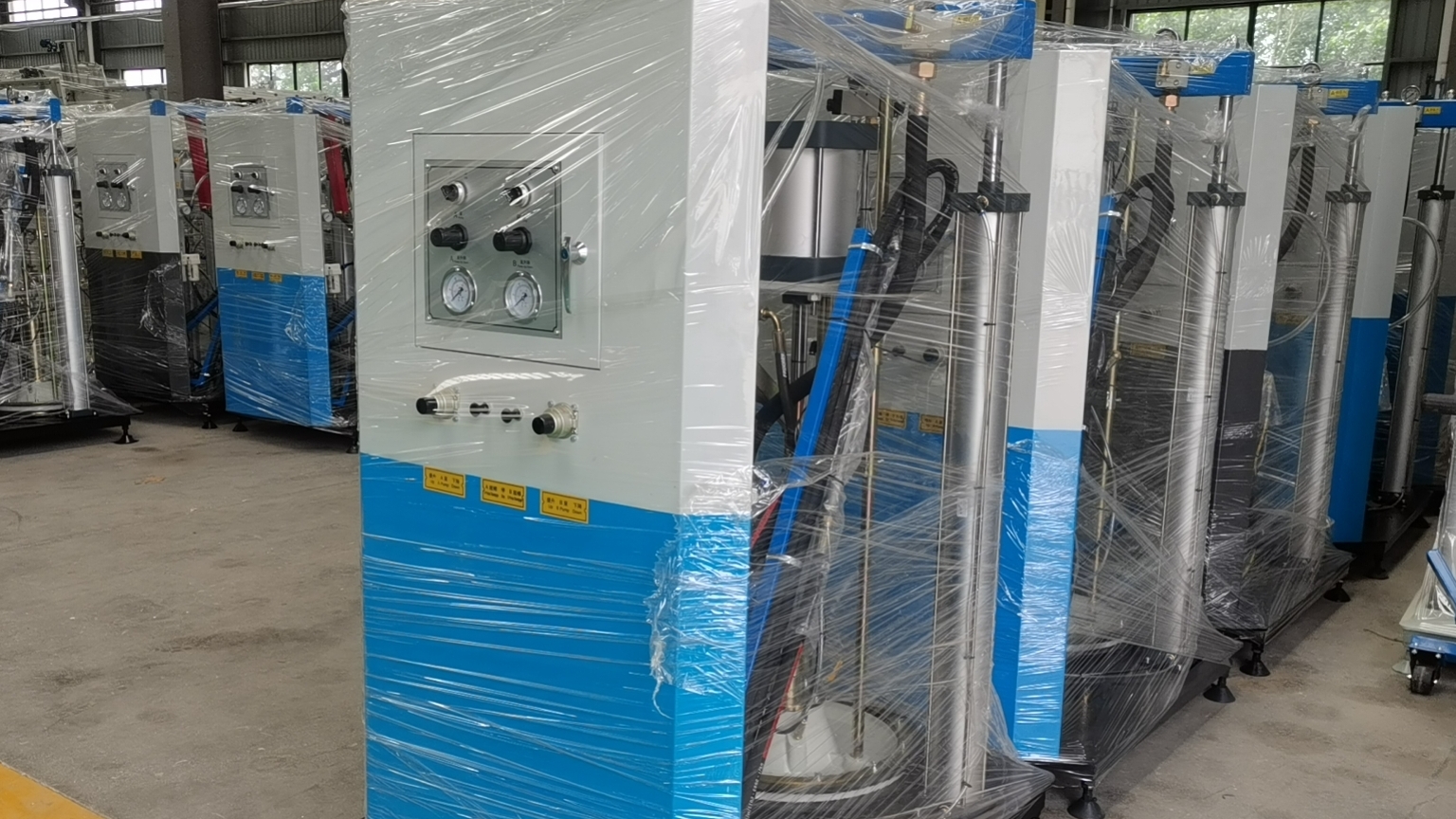
1.粘著磨損
1. Adhesive wear
在切向力的作用下,摩擦副表面的吸附膜和服污膜遭到破壞,使表面的輪廓峰在相互作用的各點(diǎn)處發(fā)生冷焊,由于相對(duì)運(yùn)動(dòng),材料便從一個(gè)表面轉(zhuǎn)移到另一個(gè)表面,形成粘著磨損。在此過程中,有時(shí)材料也會(huì)再次附著回原表面,出現(xiàn)逆轉(zhuǎn)移,或脫離所粘附的表面而成為游離顆粒。載荷越大,表面溫度越高,粘著的現(xiàn)象也越嚴(yán)重,嚴(yán)重的粘著磨損會(huì)造成運(yùn)動(dòng)副咬死,粘著磨損是金屬摩擦副之間最普遍的一種磨損形式。
Under the action of tangential force, the adsorption film and fouling film on the surface of the friction pair are damaged, causing the contour peaks of the surface to undergo cold welding at various points of interaction. Due to relative motion, the material is transferred from one surface to another, forming adhesive wear. During this process, sometimes the material may reattach to the original surface, undergo reverse transfer, or detach from the adhered surface and become free particles. The larger the load, the higher the surface temperature, and the more severe the adhesion phenomenon. Severe adhesion wear can cause the motion pair to bite, and adhesion wear is the most common form of wear between metal friction pairs.
為了減輕粘著磨損,可采取以下措施:①合理選擇配對(duì)材料。同種金屬比異種金屬易于粘著;脆性材料比塑性材料的抗粘著能力強(qiáng)。進(jìn)行表面處理(如表面熱處理、電鍍、噴涂等)可防止粘著磨損的發(fā)生。②限制摩擦表面的溫度。⑤采用含油性和極壓添加劑的潤滑劑。④控制壓強(qiáng)。
To reduce adhesive wear, the following measures can be taken: ① Reasonably select matching materials. Same metal is easier to adhere than dissimilar metal; Brittle materials have stronger anti adhesion ability than plastic materials. Surface treatment (such as surface heat treatment, electroplating, spraying, etc.) can prevent adhesive wear from occurring Limit the temperature of the friction surface. ⑤ Lubricants containing oil and extreme pressure additives are used Control the pressure.
2.磨粒磨損
2. Abrasive wear
中空玻璃生產(chǎn)線磨粒磨損從外部進(jìn)入摩棕面間的游離硬質(zhì)顆粒(如塵土或磨損造成的金屬微粒)或硬的輪廓峰尖,在較軟材料表面犁刨出很多溝紋而引起材料脫落的現(xiàn)象,稱為磨粒磨損。磨粒磨損與摩擦副材料的硬度和磨粒的硬度有關(guān)。有時(shí)選用較便宜的材料,定期更換易磨損的零件,更符合經(jīng)濟(jì)原則。
The phenomenon of abrasive wear in the production line of insulating glass refers to the free hard particles (such as dust or metal particles caused by wear) or hard contour peaks that enter the brown surface from the outside and plow many grooves on the surface of softer materials, causing material detachment. The abrasive wear is related to the hardness of the friction pair material and the hardness of the abrasive particles. Sometimes choosing cheaper materials and regularly replacing parts that are prone to wear is more in line with economic principles.
3.疲勞磨損
3. Fatigue wear and tear
在變接觸應(yīng)力的作用下,如果該應(yīng)力超過材料相應(yīng)的接觸疲勞極限,就會(huì)在摩擦副表面或表面以下一定深度處形成疲勞裂紋,隨著裂紋的擴(kuò)展及相互連接,金屬微粒便會(huì)從零件工作表面上脫落,導(dǎo)致表面出現(xiàn)麻點(diǎn)狀損傷現(xiàn)象.即形成疲勞磨損或稱疲勞點(diǎn)蝕。
Under the action of variable contact stress, if the stress exceeds the corresponding contact fatigue limit of the material, fatigue cracks will form on the surface of the friction pair or at a certain depth below the surface. As the cracks propagate and interconnect, metal particles will detach from the working surface of the part, resulting in surface pitting damage It forms fatigue wear or fatigue pitting corrosion.
為了提高零件表面的疲勞壽命,除應(yīng)合理選擇摩擦副材料外,還應(yīng)注意:①合理選擇零件接觸面的表面粗糙度。一般情況下表面粗糙度值越小,疲勞壽命越長。②合理選擇潤滑油粘度。粘度低的油易滲入裂紋,加速裂紋擴(kuò)展。粘度高的潤滑油有利于接觸應(yīng)力均勻分布,提高抗疲勞磨損的能力。在潤滑油中加入極壓添加劑或固體潤滑劑,能提高接觸表面的抗疲勞性能。③合理選擇零件接觸面的硬度。以軸承鋼為例,硬度為62HRc時(shí),抗疲勞磨損能力最高,增加或降低表面硬度,壽命都有較大的降低。
In order to improve the fatigue life of the surface of the parts, in addition to selecting friction materials reasonably, attention should also be paid to: ① selecting the surface roughness of the contact surface of the parts reasonably. In general, the smaller the surface roughness value, the longer the fatigue life Reasonably choose the viscosity of lubricating oil. Oil with low viscosity is prone to penetrate cracks and accelerate crack propagation. Lubricating oil with high viscosity is conducive to uniform distribution of contact stress and improves the ability to resist fatigue wear. Adding extreme pressure additives or solid lubricants to lubricating oil can improve the fatigue resistance of the contact surface Reasonably select the hardness of the contact surface of the parts. Taking bearing steel as an example, when the hardness is 62HRc, the ability to resist fatigue wear is the highest. Increasing or decreasing the surface hardness significantly reduces the service life.
4.腐蝕磨損
4. Corrosion and wear
中空玻璃生產(chǎn)線腐蝕磨損摩擦過程中,金屬與周圍介質(zhì)(如空氣中的酸、潤滑油等)發(fā)生化學(xué)或電化學(xué)反應(yīng)而引起的表面損傷,稱為腐蝕磨損。其中氧化磨損最為常見,這是金屬摩擦附在氧化性介質(zhì)中工作時(shí),接觸表面反復(fù)生成、磨去氧化膜的磨損現(xiàn)象,實(shí)際上是化學(xué)氧化和機(jī)械磨損兩種作用相繼進(jìn)行的過程。氧化磨損的大小取決于氧化膜的連接強(qiáng)度和氧化速度。
The surface damage caused by chemical or electrochemical reactions between metal and surrounding media (such as acids, lubricants, etc. in the air) during the corrosion, wear, and friction process of the insulated glass production line is called corrosion wear. Among them, oxidative wear is the most common, which is a wear phenomenon in which the contact surface repeatedly generates and grinds off the oxide film when metal friction is attached to an oxidizing medium. In fact, it is a process in which chemical oxidation and mechanical wear occur successively. The magnitude of oxidative wear depends on the connection strength and oxidation rate of the oxide film.
除了上述4種基本中空玻璃生產(chǎn)線磨損類型外,還有一些磨損現(xiàn)象可視為是基本磨損類型的派生或復(fù)合。前者如浸蝕磨損,后者如微動(dòng)磨損。
In addition to the four basic types of wear on insulated glass production lines mentioned above, there are also some wear phenomena that can be considered as derivatives or composites of the basic wear types. The former is like erosion wear, while the latter is like micro motion wear.
玻璃生產(chǎn)線的磨損如何解決,目前關(guān)于中空玻璃生產(chǎn)線磨損尚無統(tǒng)一的分類方法,大體可概括為兩類:一類是根據(jù)磨損結(jié)果對(duì)磨損表觀的描述,如點(diǎn)蝕磨損、膠合磨損、擦傷磨損等;另一類是根據(jù)摩擦機(jī)理,分磨粒磨損、粘著磨損、疲勞磨損、腐蝕磨損等。
How to solve the wear and tear of glass production lines? Currently, there is no unified classification method for the wear of insulated glass production lines, which can be roughly summarized into two categories: one is the description of the wear surface based on the wear results, such as pitting wear, bonding wear, abrasion wear, etc; Another type is based on the friction mechanism, which includes abrasive wear, adhesive wear, fatigue wear, corrosion wear, etc.
1.粘著磨損
1. Adhesive wear
在切向力的作用下,摩擦副表面的吸附膜和服污膜遭到破壞,使表面的輪廓峰在相互作用的各點(diǎn)處發(fā)生冷焊,由于相對(duì)運(yùn)動(dòng),材料便從一個(gè)表面轉(zhuǎn)移到另一個(gè)表面,形成粘著磨損。在此過程中,有時(shí)材料也會(huì)再次附著回原表面,出現(xiàn)逆轉(zhuǎn)移,或脫離所粘附的表面而成為游離顆粒。載荷越大,表面溫度越高,粘著的現(xiàn)象也越嚴(yán)重,嚴(yán)重的粘著磨損會(huì)造成運(yùn)動(dòng)副咬死,粘著磨損是金屬摩擦副之間最普遍的一種磨損形式。
Under the action of tangential force, the adsorption film and fouling film on the surface of the friction pair are damaged, causing the contour peaks of the surface to undergo cold welding at various points of interaction. Due to relative motion, the material is transferred from one surface to another, forming adhesive wear. During this process, sometimes the material may reattach to the original surface, undergo reverse transfer, or detach from the adhered surface and become free particles. The larger the load, the higher the surface temperature, and the more severe the adhesion phenomenon. Severe adhesion wear can cause the motion pair to bite, and adhesion wear is the most common form of wear between metal friction pairs.
為了減輕粘著磨損,可采取以下措施:①合理選擇配對(duì)材料。同種金屬比異種金屬易于粘著;脆性材料比塑性材料的抗粘著能力強(qiáng)。進(jìn)行表面處理(如表面熱處理、電鍍、噴涂等)可防止粘著磨損的發(fā)生。②限制摩擦表面的溫度。⑤采用含油性和極壓添加劑的潤滑劑。④控制壓強(qiáng)。
To reduce adhesive wear, the following measures can be taken: ① Reasonably select matching materials. Same metal is easier to adhere than dissimilar metal; Brittle materials have stronger anti adhesion ability than plastic materials. Surface treatment (such as surface heat treatment, electroplating, spraying, etc.) can prevent adhesive wear from occurring Limit the temperature of the friction surface. ⑤ Lubricants containing oil and extreme pressure additives are used Control the pressure.
2.磨粒磨損
2. Abrasive wear
中空玻璃生產(chǎn)線磨粒磨損從外部進(jìn)入摩棕面間的游離硬質(zhì)顆粒(如塵土或磨損造成的金屬微粒)或硬的輪廓峰尖,在較軟材料表面犁刨出很多溝紋而引起材料脫落的現(xiàn)象,稱為磨粒磨損。磨粒磨損與摩擦副材料的硬度和磨粒的硬度有關(guān)。有時(shí)選用較便宜的材料,定期更換易磨損的零件,更符合經(jīng)濟(jì)原則。
The phenomenon of abrasive wear in the production line of insulating glass refers to the free hard particles (such as dust or metal particles caused by wear) or hard contour peaks that enter the brown surface from the outside and plow many grooves on the surface of softer materials, causing material detachment. The abrasive wear is related to the hardness of the friction pair material and the hardness of the abrasive particles. Sometimes choosing cheaper materials and regularly replacing parts that are prone to wear is more in line with economic principles.
3.疲勞磨損
3. Fatigue wear and tear
在變接觸應(yīng)力的作用下,如果該應(yīng)力超過材料相應(yīng)的接觸疲勞極限,就會(huì)在摩擦副表面或表面以下一定深度處形成疲勞裂紋,隨著裂紋的擴(kuò)展及相互連接,金屬微粒便會(huì)從零件工作表面上脫落,導(dǎo)致表面出現(xiàn)麻點(diǎn)狀損傷現(xiàn)象.即形成疲勞磨損或稱疲勞點(diǎn)蝕。
Under the action of variable contact stress, if the stress exceeds the corresponding contact fatigue limit of the material, fatigue cracks will form on the surface of the friction pair or at a certain depth below the surface. As the cracks propagate and interconnect, metal particles will detach from the working surface of the part, resulting in surface pitting damage It forms fatigue wear or fatigue pitting corrosion.
為了提高零件表面的疲勞壽命,除應(yīng)合理選擇摩擦副材料外,還應(yīng)注意:①合理選擇零件接觸面的表面粗糙度。一般情況下表面粗糙度值越小,疲勞壽命越長。②合理選擇潤滑油粘度。粘度低的油易滲入裂紋,加速裂紋擴(kuò)展。粘度高的潤滑油有利于接觸應(yīng)力均勻分布,提高抗疲勞磨損的能力。在潤滑油中加入極壓添加劑或固體潤滑劑,能提高接觸表面的抗疲勞性能。③合理選擇零件接觸面的硬度。以軸承鋼為例,硬度為62HRc時(shí),抗疲勞磨損能力最高,增加或降低表面硬度,壽命都有較大的降低。
In order to improve the fatigue life of the surface of the parts, in addition to selecting friction materials reasonably, attention should also be paid to: ① selecting the surface roughness of the contact surface of the parts reasonably. In general, the smaller the surface roughness value, the longer the fatigue life Reasonably choose the viscosity of lubricating oil. Oil with low viscosity is prone to penetrate cracks and accelerate crack propagation. Lubricating oil with high viscosity is conducive to uniform distribution of contact stress and improves the ability to resist fatigue wear. Adding extreme pressure additives or solid lubricants to lubricating oil can improve the fatigue resistance of the contact surface Reasonably select the hardness of the contact surface of the parts. Taking bearing steel as an example, when the hardness is 62HRc, the ability to resist fatigue wear is the highest. Increasing or decreasing the surface hardness significantly reduces the service life.
4.腐蝕磨損
4. Corrosion and wear
中空玻璃生產(chǎn)線腐蝕磨損摩擦過程中,金屬與周圍介質(zhì)(如空氣中的酸、潤滑油等)發(fā)生化學(xué)或電化學(xué)反應(yīng)而引起的表面損傷,稱為腐蝕磨損。其中氧化磨損最為常見,這是金屬摩擦附在氧化性介質(zhì)中工作時(shí),接觸表面反復(fù)生成、磨去氧化膜的磨損現(xiàn)象,實(shí)際上是化學(xué)氧化和機(jī)械磨損兩種作用相繼進(jìn)行的過程。氧化磨損的大小取決于氧化膜的連接強(qiáng)度和氧化速度。
The surface damage caused by chemical or electrochemical reactions between metal and surrounding media (such as acids, lubricants, etc. in the air) during the corrosion, wear, and friction process of the insulated glass production line is called corrosion wear. Among them, oxidative wear is the most common, which is a wear phenomenon in which the contact surface repeatedly generates and grinds off the oxide film when metal friction is attached to an oxidizing medium. In fact, it is a process in which chemical oxidation and mechanical wear occur successively. The magnitude of oxidative wear depends on the connection strength and oxidation rate of the oxide film.
除了上述4種基本中空玻璃生產(chǎn)線磨損類型外,還有一些磨損現(xiàn)象可視為是基本磨損類型的派生或復(fù)合。前者如浸蝕磨損,后者如微動(dòng)磨損。
In addition to the four basic types of wear on insulated glass production lines mentioned above, there are also some wear phenomena that can be considered as derivatives or composites of the basic wear types. The former is like erosion wear, while the latter is like micro motion wear.
本文由 中空玻璃生產(chǎn)線 友情奉獻(xiàn).更多有關(guān)的知識(shí)請(qǐng)點(diǎn)擊 http://m.bjrcc.com.cn 真誠的態(tài)度.為您提供為全面的服務(wù).更%
- 雙組份打膠機(jī)旋轉(zhuǎn)伺服報(bào)警810?這樣解決快速恢復(fù)生產(chǎn) 2026/01/16
- 中空玻璃加工設(shè)備:打膠機(jī)機(jī)頭升降鏈條松動(dòng)?這樣調(diào)節(jié)精準(zhǔn)又牢固 2026/01/14
- 中空玻璃生產(chǎn)線合片段橫梁調(diào)平指南:小誤差別忽視,這樣調(diào)精準(zhǔn)又省心 2026/01/12
- 中空玻璃加工設(shè)備的合片段橫梁高低不平?這樣調(diào),合片精準(zhǔn)不跑偏 2026/01/11
- 中空玻璃加工設(shè)備板壓段卡殼?輪子走玻璃不走?這樣排查超高效 2026/01/10
- 中空生產(chǎn)線封膠線機(jī)頭立柱不平?這樣調(diào)整,封膠均勻不返工 2026/01/05
- 中空玻璃加工設(shè)備卡殼?液壓站不起壓?卡閥問題這樣解決超省心 2025/12/31
- 全自動(dòng)封膠線卡殼?貼鋁條后玻璃不走、報(bào)警?這樣解決超簡單 2025/12/31
- 冬天中空玻璃生產(chǎn)線出輪子灰印?這些日常難題解決辦法請(qǐng)收好 2025/12/30
- 全自動(dòng)封膠線的“智能眼”——LOW-E識(shí)別儀,守護(hù)封膠質(zhì)量的關(guān)鍵 2025/12/30

 產(chǎn)品分類Product categories
 聯(lián)系我們Contact us
- 咨詢熱線:0531-85717458 13705446998
- 公司地址: 山東省德州市齊河安頭鄉(xiāng)企巢工業(yè)園
- 掃碼聯(lián)系我們: